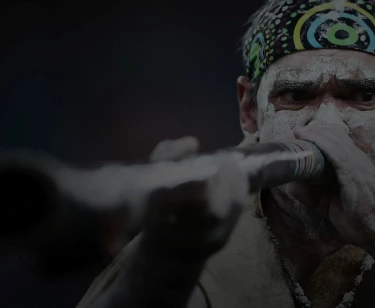
The IRL Rugby League World Cup 2026 has arrived... the ultimate stage, where nations clash, heroes rise and legends are forged.
The men's World Cup, women's World Cup and wheelchair World Cup will captivate fans across Australia, New Zealand and Papua New Guinea.
View the full draw and secure your tickets here!
It all kicked off at Allianz Stadium in Sydney when reigning men's champions Australia kicked off their title defence in an absolute epic against arch-rivals New Zealand.
With fullbacks Reece Walsh and Kalyn Ponga engaging in a mesmeric duel, the record crowd was treated to one of the all time great Tests, with the Kangaroos saluting 24-22.
The following night at CommBank Stadium we had Australia's Jillaroos launch their title defence with a 40-0 win over a brave Fetu Samoa.
On Friday October 30 the wheelchair World Cup gets underway in Wollongong.
Across four weeks of pulsating rugby league action, matches will be played Sydney, Newcastle, Wollongong, Gold Coast, Townsville, Brisbane, Perth, Christchurch and Port Moresby as we build up to the World Cup Final at Suncorp Stadium on Sunday, November 15.
The streamlined format for RLWC2026 will ensure the 17th edition of the Rugby League World Cup since 1954 is the most competitive and meaningful yet, with more teams than ever capable of winning.
Need to Know
Men RLWC26
• 2 x 40-minute halves
• 6-again rules
• Interchanges – 8
• Kicking rules - 40/20 and 20/40
• 6 x player interchange bench with only 4 x players to be used
• Golden Point extra time.
WOMEN RLWC26
• 2 x 35-minute halves
• No 6-again rules
• Interchange - 10
• Kicking rules - 40/30 and 20/50
• 4 x player interchange bench
• 18th replacement player
• Golden Point extra time.
Competition Points and Rankings
• Win – 2 points
• Loss – no points
Men’s Tournament
At the conclusion of all pool Matches, as provided for in the Tournament draw:
• If two (2) or more Teams from the same pool are level on points, for-and-against will determine the highest ranked Team;
• If a Team from Group B and a Team from Group C are level on points, the head-to-head result of their Match will determine the highest ranked Team on the combined ladder.
Women’s Tournament
At the conclusion of all pool Matches, as provided for in the Tournament draw, if two (2) or more Teams are equal in competition points and the top two ranked Teams in a pool cannot be determined as above, rankings will be determined by the criteria outlined below:
• a) greater positive difference between points scored for and against, then if equal;
• b) greater percentage of points scored for and against, being determined by points
scored for x 100 points scored against 1, then if equal;
• c) most tries scored, then if equal;
• d) most goals kicked, then if equal;
• e) most drop goals kicked, then if equal;
• f) least amount of penalties conceded in the pool Matches,
• then if equal; g) the toss of a coin.
Extra time
If scores are tied at full-time, Golden Point Rules will apply for all Matches.
‘Golden Point Rules’ means:
- A period of extra time shall follow the completion of ordinary time, wherein the first scorer of any point(s) (i.e. field goal, penalty goal or try) will immediately be declared the winner.
• If no point(s) have been scored after the initial five minutes, the Referee shall cease play and the Teams shall immediately change ends of the field, and play will continue on an unlimited basis until a point(s) is scored, and that Team is declared the winner.
• If a try is scored in Golden Point, the conversion kick will not be permitted.
18th Player Replacement Process
A Team may activate its 18th Player Replacement to replace another of its Players who has become ineligible to play in the following circumstances only:
• where two of a Team’s Players in a Match have been designated ineligible to return to the field by the Team Doctor following a Head Injury Assessment;
• where one of the Team’s Players is designated ineligible to return to the field by the Team Doctor due to injury and where the relevant injury was caused by the foul play of an opposition Player and the opposition Player was sin-binned or dismissed from the field as a result of the foul play.
Shot Clocks
Shot clocks will be used for all goal line drop-outs (25 seconds), 20m drop-outs (25 seconds) and scrums (30 seconds).
Competing Nations
Men
The 10 teams in the men's draw are the quarter-finalists from the 2021 World Cup - Australia, Samoa, New Zealand, England, Lebanon, Tonga, Fiji and Papua New Guinea - plus France and Cook Islands, who won their spots through global qualifying tournaments.
- Australia
- Samoa
- New Zealand
- England
- Lebanon
- Tonga
- Fiji
- Papua New Guinea
- France
- Cook Islands

Women
The four Women’s semi-finalists at RLWC21 automatically qualified. France and Wales won European qualifying tournaments, while Fetu Samoa won the Pacific qualifying tournament in 2024. Fiji claimed the final spot by winning the inaugural IRL World Series 2025 in Canada.
- Australia (Winner 2021)
- New Zealand (Finalist 2021)
- Papua New Guinea (Semi-final)
- England (Semi-final)
- France (European Qualifier 1)
- Wales (European Qualifier 2)
- Samoa (Pacific Qualifier)
- Fiji (IRL Rugby League World Series winner)

Wheelchair
- England (RLWC2021 Winner)
- France (RLWC 2021 Final)
- Wales (Semi-final)
- Australia (Semi-final)
- Ireland (Europe)
- Scotland (Europe)
- New Zealand (Pacific)
- United States (Americas)
Story of the World Cup
What began in 1954 in France as a pipedream has evolved into a showpiece event which has been won 12 times by defending champions Australia, while Great Britain took home the prize three times and New Zealand once, with a famous victory over the Kangaroos in Brisbane in 2008.
To the winner goes the Paul Barriere Trophy, named in honour of the French Rugby League President of the 1940s and 50s who was instrumental in making the concept a reality in 1954, when France, Great Britain, New Zealand and Australia played a round robin tournament with the top two teams progressing to the first ever World Cup Final.
That honour went to host nation France, captained by legendary fullback Puig Aubert, and Great Britain, who would go on to win the final 16-12 at Parc des Princes.
Three years later the Australian side captain-coached by Newtown’s Dick Poole would claim their first title by virtue of three convincing victories in the pool stage with no final being played.
Boasting such luminaries as Norm Provan, Keith Barnes, Keith Holman and Harry Wells, the Aussies thrilled massive crowds at the Sydney Cricket Ground and the Gabba to dominate the Kiwis, French and British.
The 1960 World Cup again comprised of only pool games, with host nation Great Britain sweeping the pool under Eric Ashton’s leadership to win their second World Cup.
In the ensuing six decades the tournament has been dominated by Australia with 10 titles, while Great Britain’s only other success came in France in 1972 and the Kiwis finally savoured the ultimate glory at their 13th attempt, beating the Kangaroos 34-20 at Suncorp Stadium in a result that shook the league world.
Try as they might, New Zealand had never beaten their Trans-Tasman rival in a single tournament fixture, let alone a final, but with 50,559 in the house and millions more watching on television, the Stephen Kearney-coached Kiwis produced an unbelievable comeback from 10-0 down in the first 20 minutes to break their drought in style.
With the game in the balance midway through the second half it was a case of ‘cometh the hour mark, cometh the man’ as Benji Marshall scored the most important try in the proud history of New Zealand rugby league.
Kangaroos fullback Billy Slater had retrieved a kick near his own goal line and tried to get around the outside of Kiwi winger Manu Vatuvei, who shoved the Aussie No.1 towards the sideline.
Rather than take the ball into touch, Slater made the fateful decision to toss the ball back infield, hoping to find a team-mate. Instead it was Marshall on the spot to pounce on the loose ball and plant it down for a try that gave New Zealand a 22-16 lead.
Greg Inglis scored soon after to pull it back to 22-20 before a penalty try to Lance Hohai which Marshall converted in the 70th minute gave the Kiwis an eight-point advantage and the Cup was theirs, before a late Adam Blair try iced the cake.
The Kangaroos hit back in style four years later in England, racking up 126-0 in their quarter-final and semi-final demolition of the USA and Fiji before dismantling New Zealand 34-2 in the Final at Old Trafford thanks to doubles from Slater and Brett Morris.
In 2017 it was Australia again standing tall, this time on home soil, but not before a hell of a scare from England in the Final, which was decided by a lone try to Boyd Cordner early in the match.
In England in 2022, the Kangaroos again reigned supreme as the COVID-postponed RLWC 2021 sprung to life and gave us some many magical moments and heroes.
Led by Stephen Crichton, Samoa did a remarkable job to win their way through to the final but it was the Kangaroos getting the job done 30-10 at Old Trafford thanks to doubles from Latrell Mitchell and James Tedesco.
With so much history and so much to play for, it promises to be an epic four weeks as bragging rights go on the line at World Cup 2026.
Most World Cup Matches
17 Cameron Smith (Australia)
16 Chris Hill (England)
15 Bob Fulton (Australia)
14 Roger Millward (Great Britain, England)
14 Arthur Beetson (Australia)
14 Dennis Williams (New Zealand)
14 George Nicholls (Great Britain, England)
14 John Atkinson (Great Britain, England)
14 Tony Coll (New Zealand)
14 Ashton Sims (Fiji)
14 Jarryd Hayne (Fiji, Australia)
14 Josh Papalii (Australia, Samoa)
14 Kallum Watkins (England)
14 Kevin Naiqama (Fiji)