Aboriginal and Torres Strait Islanders are advised the following contains references to and images of people who have died.
A tour to Tonga for a group of proud Indigenous young men has proven a key link in the inspiration chain for Indigenous All Stars and even paved the path for junior international representative tours.
The 1990 Pacific Cup was the occasion for a watershed moment as an Australian Indigenous team wore the green-and-gold ‘V’ and adorned the ARL (Australian Rugby League) crest alongside the Aboriginal flag for the first time.
The five-day carnival in Nuku’alofa pitted what was effectively an Under 19 team of players invited from communities in New South Wales, Queensland and Northern Territory against men from Tonga, Niue, Papua New Guinea, Western Samoa, Tokelau and Niue, as well as a New Zealand Maori representative team.
Leading them were three professionals – then Gold Coast Seagull Ron Gibbs, representative star Ricky Walford and South Sydney’s Graham Lyons – who leapt at the chance to represent their culture.

Gibbs recalled the concept being an initiative of Steve ‘Bear’ Hall, and he especially savoured the honour.
“It was unbelievable for me, but it probably opened the eyes of those younger blokes that participated in something like that. She was pretty good,” he said.
“They gave the best performance. Most of the were only little skinny blokes but they played their guts out.”
It became even more special when the squad came together for a four-day training camp at the Australian Institute of Sport.
“For me personally, it was an honour to even be invited, right from the start, to give some more young blokes an opportunity.
“I got down there and they made me the captain and I went: ‘Oh damn, captain? I got no brains on me whatsoever’
Ron Gibbs
“I only know the other way, and that’s the way I captained, by leading by example – not necessarily getting them to play the way I wanted them to be or playing though like I did, but I wanted them to use their skills and their level.
“No use talking about it, I’m a man of action and that’s why I got the nickname ‘Rambo’ and that’s the only way I can do it. I always told the kids to be who you are and enjoy it.
“Those kids took to me like a father figure. Some of them wouldn’t have known who I was, they never gave me the opportunity to play Origin, they never gave me a chance to play for Australia, so for me, representing my people and Australia was one of the biggest parts of my football career and I was proud and honoured.
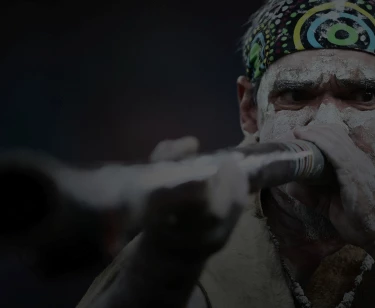
“I had to do a lot of things with that, meet the King of Tonga and doing the speaking for the crew being the leaders and giving the didgeridoo.
“Every team we played, we gave a didgeridoo from the Northern Territory and I have one of them at home.
“When I got home, we had one left and the officials gave it to me and I’ve still got it at home, and my jumpers, I can put them on today.”
The other seasoned pro who hailed from western NSW was St George’s Ricky Walford, who had earlier made his State of Origin debut for the Blues – but this was just as special.

“I think it was a great honour to represent not only Australia, but the Aboriginal people, on an international level, sanctioned by the Australian Rugby League, which was terrific. We had the Aboriginal flag on our sleeve and the ARL logo on our jumpers,” he said.
“It was a great experience for the young blokes, but in terms of the competition, we didn’t fare as well as we thought we would.
“Some of our blokes were giving away two or three stone (up to 20kg) man-for-man against some of the Samoa, Tonga, Cook Islands packs and they still gave as good as they got.”
The team was knocked out in the semi-finals by Western Samoa, going down 26-16, but Walford said the experience served as inspiration to a number of communities.
Graham Lyons lights up Endeavour Field
The emerging players included Darrell Trindall, who has made his NSWRL first grade debut that year and kicked on to play 171 games in the top grade, while the likes of Cherbourg great Stafford Sandow and Randall Taylor – father of Ash Taylor – inspired more Indigenous talents to emerge.
“Obviously when you play for your country in any sport, the recognition you get, not only gives you the self-satisfaction of achieving that personally, but the broader community you live in, the inspiration you pass on to other kids and other families, but really, we just all tried to make our community better, living out bush back in the day,” Walford said.
“All the things go on and people say, ‘Well, OK, if he can do it and he comes from here, living in the same environment as me, I can too’.
“Those little things that happen to us go on to inspire kids who come through the system and hopefully Ronnie and I still do that with the communities we come from.”
Open age teams attended the tournament in 1992 and 1994 to withstand the physicality, with selection shared between Koori and Murri rugby league decision-makers – one of the many ventures that paved the way to the modern day All Stars and Pacific Championships.